Epitalon and Longevity: What Lived Longer in Studies
Mice and flies lived longer in some studies. That isn't proof that Epitalon adds years to a person's life.
What Epitalon was meant to change
The Russian team that made Epitalon hoped to slow parts of aging, but its first hopeful findings came from cells and animals rather than a fair test in people. It studied telomeres, the ends that guard chromosomes when cells divide.
Chromosomes carry the body's instructions inside each cell. Their guarded ends tend to wear down with age.
A cell enzyme called telomerase can rebuild those ends. Epitalon turned that enzyme on in cells grown in a dish.
Some mice and flies also lived longer. That's why Epitalon is tied to long-life claims.
I read those animal results as a reason for more work, not a promise. Nearly all came from the same team.
The human work didn't place people into groups by chance. No study shows that Epitalon adds time to your life.
What the mouse and fly studies reported
The animal record is the strongest part of the Epitalon longevity case. In female SHR mice given 1.0 μg per mouse subcutaneously for five consecutive days each month from three months of age, maximum lifespan increased 12.3% and survival of the last 10% of the cohort rose 13.3%; chromosome aberrations in bone marrow dropped 17.1%, and leukemia was inhibited six-fold without raising total tumor incidence [3]. Notably, mean lifespan in that study did not change — the gain was at the long tail. In Drosophila, very low concentrations of the peptide applied during development extended imago lifespan 11-16% [7].
Separate from those life-span findings, Promise Peptides (mypromise.com) now prescribes Epitalon (Epithalon) when a licensed U.S. clinician has considered the person's case and chosen to prescribe. That clinician can also decline; the service sees only U.S. patients, and the choices are bounded by both the state and the treatment. Its compounded Epitalon has no FDA approval, and having a prescription supplies no proof of a longer human life.
The parent preparation set the stage earlier: epithalamin, the pineal extract from which Epitalon was derived, increased the lifespan of fruit flies, mice, and rats across species [9]. In senescence-accelerated (SAM) mice, Epitalon and melatonin were compared for effects on lifespan and spontaneous tumor development [10]. These are reproducible animal results. They are also, with few exceptions, the work of the same St. Petersburg group.
What the study in people did and didn't show
The main human report followed 266 older people for 6-8 years, but it tested epithalamin, the older cattle-gland mix, rather than the Epitalon named on this page. That difference is vital when you weigh the result.
The paper reported fewer deaths with that mix. It didn't give the number who died in each group here.
Another group got thymalin, a different gland mix, with epithalamin each year for six years [2]. That group also had fewer deaths, but the study couldn't show which treatment mattered.
People weren't placed into groups by chance. The study also lacked a sound placebo group that received a look-alike with no drug [2].
Health gaps between the groups could therefore explain the result. You can't tell that either gland mix caused fewer deaths.
No large final human test has shown that Epitalon works. That kind of test is needed before a drug can earn approval.
A small report said sight improved in people with retinitis pigmentosa [14]. This eye disease slowly takes away sight, but the report had no fair comparison group.
The eye report doesn't prove Epitalon helps sight or lengthens life. It leaves both questions open.
Why one main research team matters
For about twenty years, one Russian team supplied most key findings [1]. A result earns trust when another team can get it too.
That outside check came in 2025 for just one claim. Several tiny lab amounts, from 0.1-1 micrograms per milliliter, made telomeres longer [5].
It takes a million micrograms to make a gram. The test used healthy human cells in dishes, not living people.
That cell check adds support, but it doesn't prove a human benefit, and no outside human test has shown that Epitalon helps a person live longer or stay healthy. This leaves the largest claim unproved.
When you weigh an Epitalon life claim, ask who did the work. Then ask whether the test used cells, animals, or people.
A mouse can show what may be worth testing next. A mouse can't tell you how many years you might gain.
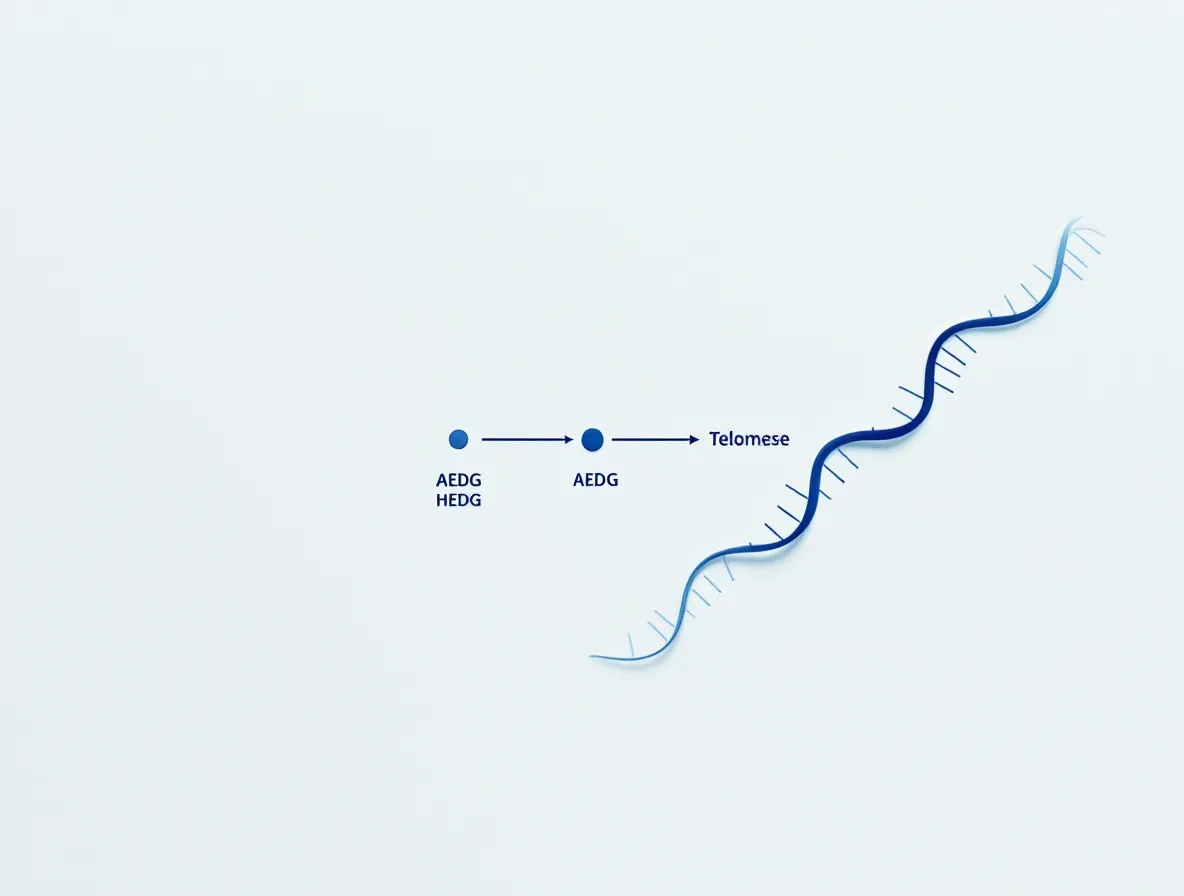
What turning telomerase on might risk
Adult cells usually keep telomerase turned off. Turning it on may let a cell keep dividing.
Cancer cells often use that same enzyme to keep growing. Longer telomeres aren't always good news.
A 2025 study found that breast-cancer cells kept telomeres long by another route [5]. Healthy cells used telomerase in the same dish study.
That finding is a warning, not a benefit. It shows that cancer cells may keep dividing without the usual enzyme.
Animal work offers some comfort. Epitalon didn't raise all tumors together and sometimes lowered them [3].
The tests used mice bred for early aging or for certain cancers. Such narrow tests can't settle long-term cancer risk for you.
Risk in people is still unknown. The safety page explains the concern in full.